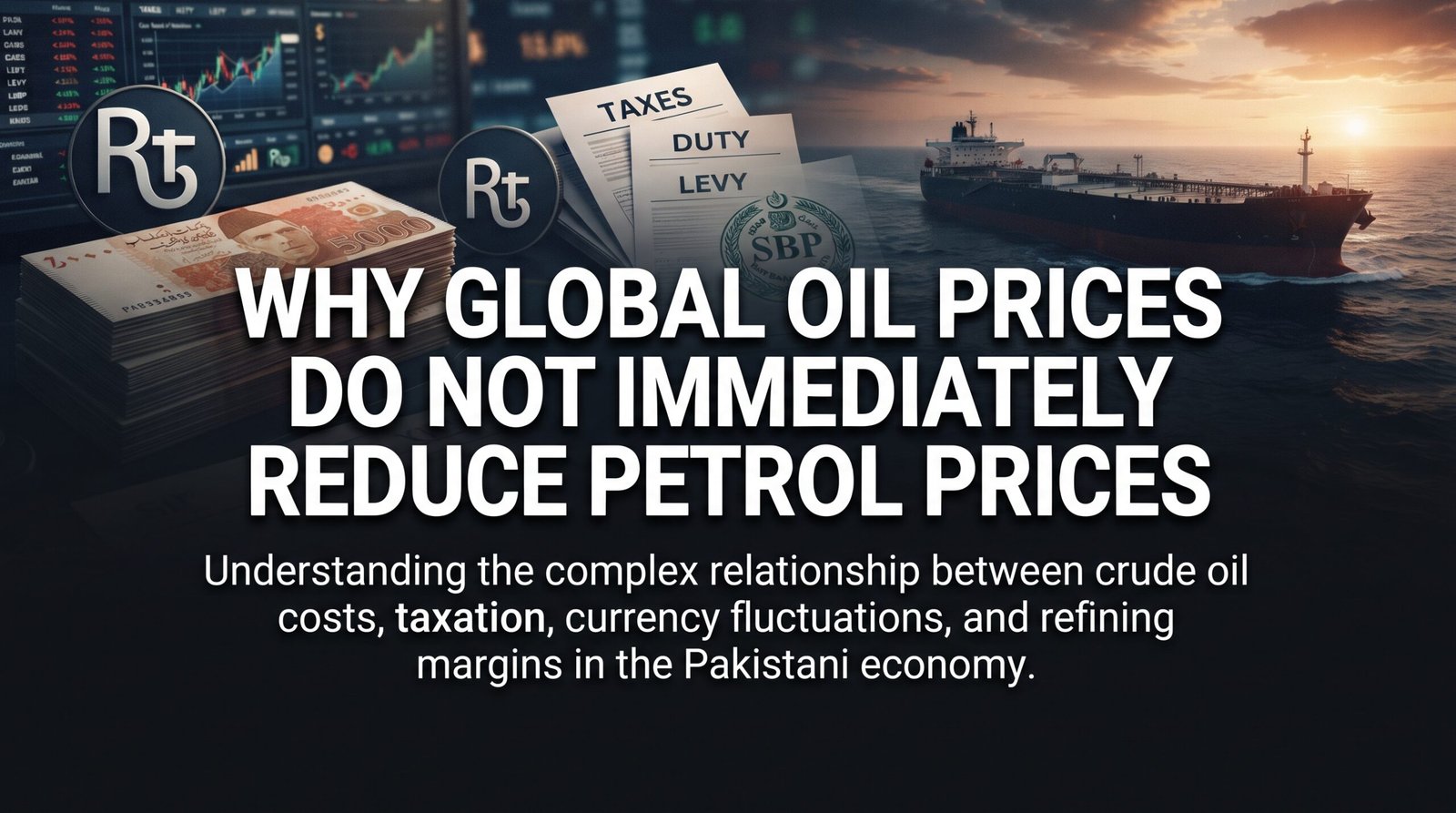
Despite a recent decline in international crude oil prices, Pakistani consumers are unlikely to see an immediate reduction in petrol prices as several domestic factors continue to influence the cost of petroleum products.
Global oil prices have fallen in recent sessions amid hopes that diplomatic efforts could ease disruptions to oil shipments through the Strait of Hormuz. On Thursday, Brent crude fell to around $86.77 per barrel, while West Texas Intermediate (WTI) dropped to approximately $81.10 per barrel.
The decline has been driven partly by expectations that negotiations involving Iran and regional countries could help restore shipping through the strategically important Strait of Hormuz. However, oil flows through the waterway remain significantly disrupted, meaning uncertainty continues to surround global energy supplies.
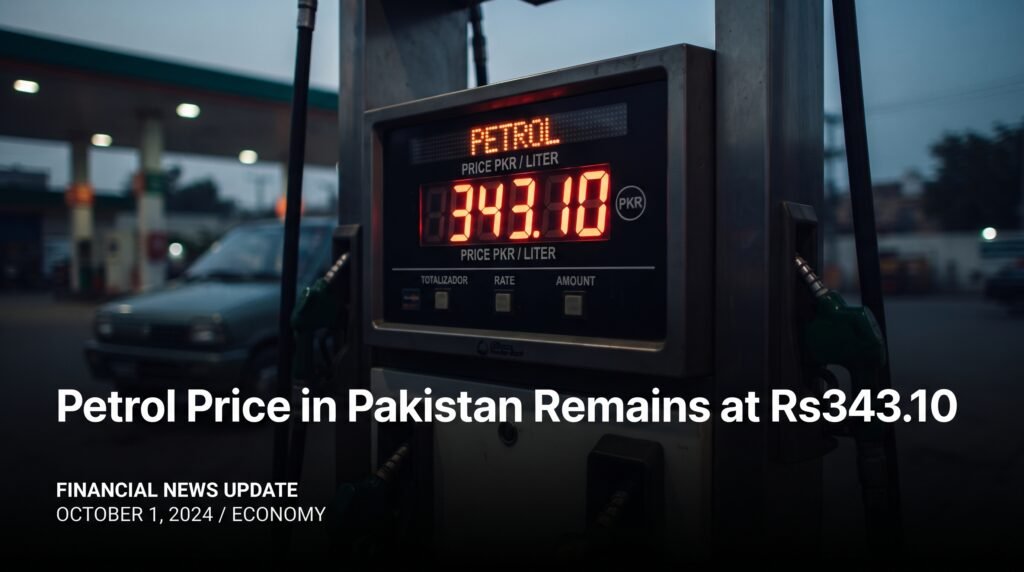
Petrol Price in Pakistan Remains at Rs343.10
In Pakistan, the government has fixed the current petrol price at Rs343.10 per litre, while high-speed diesel (HSD) is priced at Rs371.80 per litre. The latest rates came into effect on August 26 following an increase of Rs1.12 per litre for petrol and Rs1.11 per litre for diesel.
The latest increase means that the recent decline in international oil prices has not yet translated into cheaper fuel for Pakistani consumers.
Why Global Oil Prices Do Not Immediately Reduce Petrol Prices
A fall in international crude prices does not automatically result in an equivalent reduction in petrol prices in Pakistan.
Domestic petroleum prices are influenced by several components, including international petroleum product prices, the rupee-dollar exchange rate, taxes and duties, freight costs, import premiums and other charges.
Pakistan’s current pricing mechanism also allows fuel prices to be adjusted more frequently in response to changes in international markets.
According to recent reports, the government continues to collect substantial taxes and duties on petroleum products. Petrol currently carries around Rs114 per litre in taxes and duties, while the corresponding figure for high-speed diesel is around Rs100 per litre.
Strait of Hormuz Remains a Key Factor
The situation surrounding the Strait of Hormuz remains particularly important for global oil markets. The waterway handles a significant share of global oil and LNG shipments, and continued disruption has kept energy markets highly volatile.
Recent diplomatic developments have nevertheless raised hopes that shipping activity could gradually recover. If oil flows return to more normal levels and international prices remain lower for a sustained period, Pakistan could eventually see greater relief in domestic fuel prices.
For now, however, consumers should not expect an immediate major reduction at petrol stations.
Relief for Consumers May Take Time
The recent movement in global oil prices could eventually provide some relief if the decline continues and is reflected in the petroleum products Pakistan imports.
However, the impact on local pump prices will depend on several variables rather than crude oil prices alone. Changes in the exchange rate, international refined-product prices, taxes, freight charges and import premiums can all affect the final price paid by consumers.
For Pakistani motorists, therefore, the immediate outlook remains uncertain despite the recent easing in international oil prices.
Any meaningful reduction in petrol prices is more likely if global energy prices remain subdued and supply disruptions ease further.
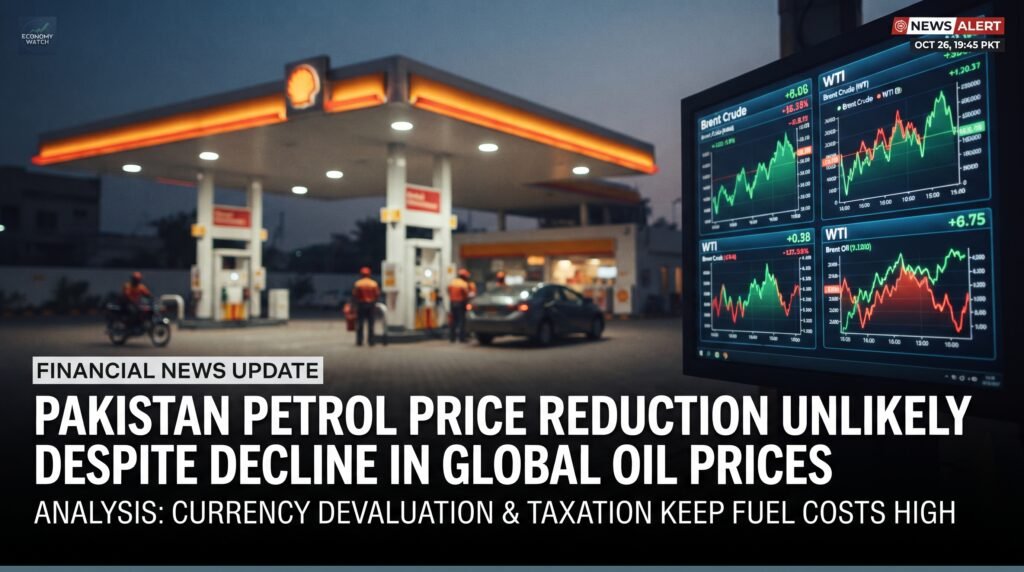
Disclaimer: This article is for informational purposes only and is based on available reports and market information. The accompanying image is AI-generated and is provided for illustrative purposes only.