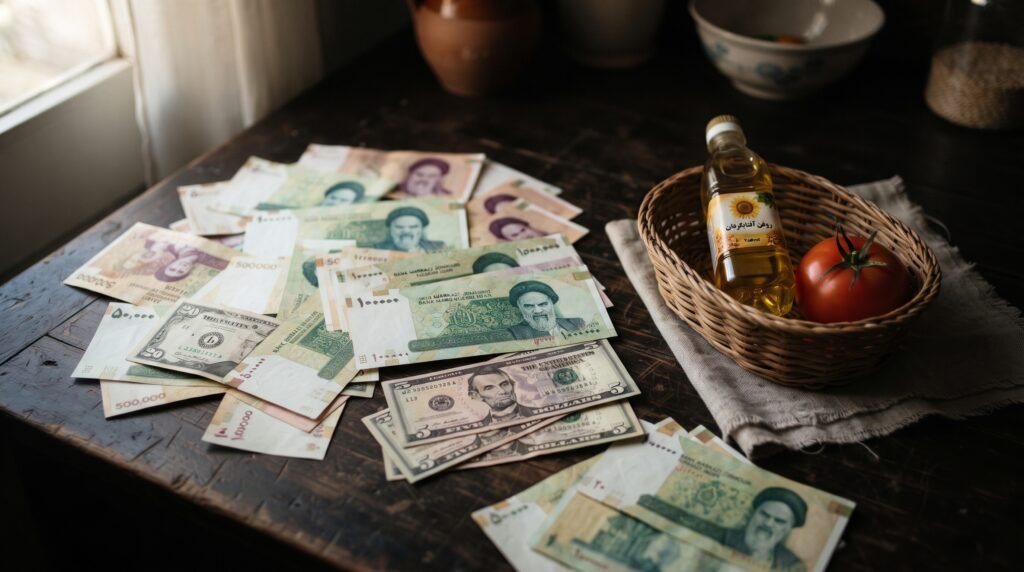
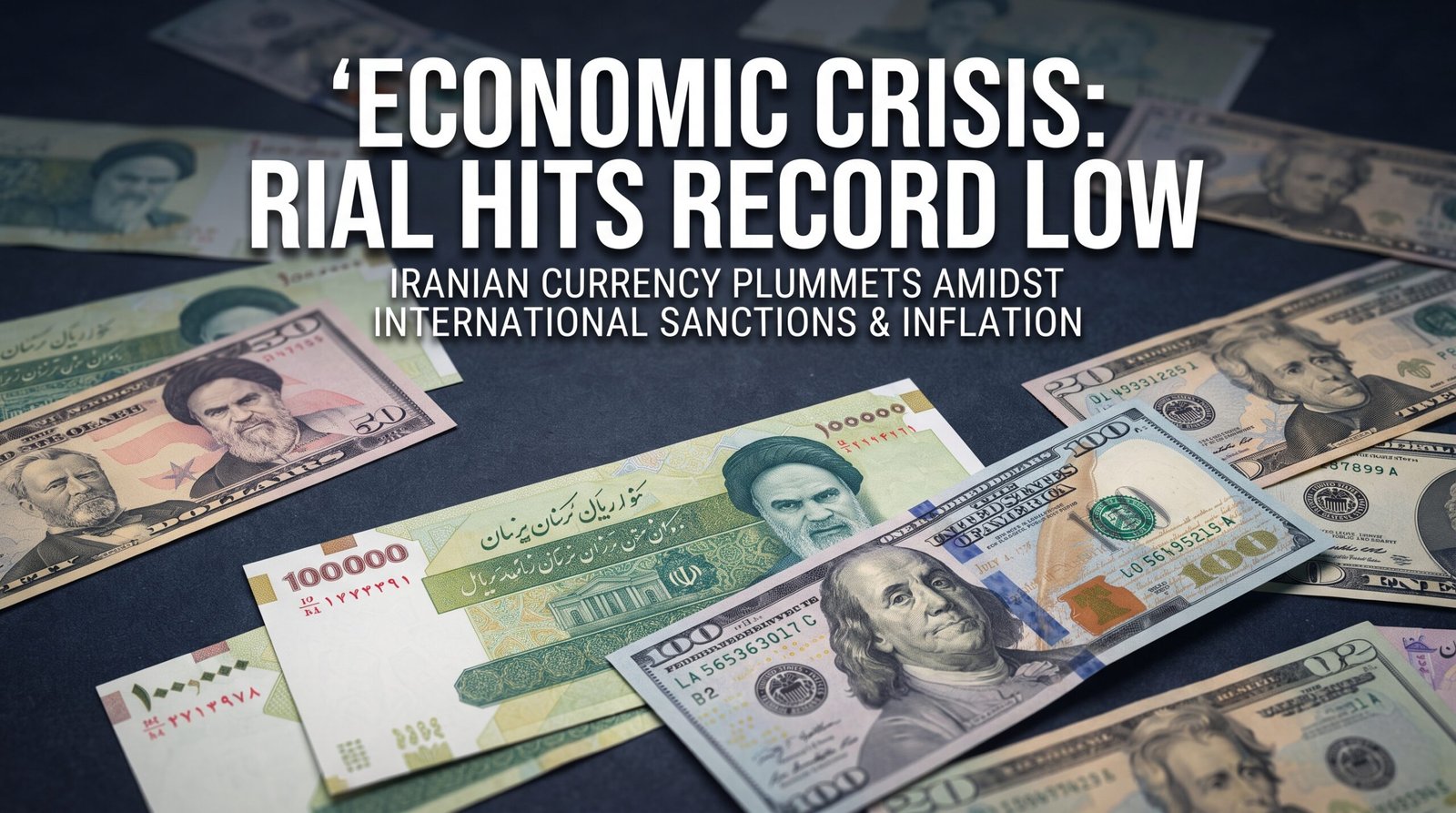
Iran’s rial has fallen to a new record low against the US dollar, with the currency trading at around 2 million rials per dollar on the open market, highlighting the mounting economic pressure on households already facing sharply higher food prices.
Market data on August 27 showed the US dollar trading at about 2.015 million Iranian rials, remaining around the record levels reached earlier this week.
The latest depreciation represents a further erosion of the purchasing power of the Iranian currency. On August 24, the rial fell to approximately 2.02 million rials per US dollar, according to reports citing open-market trading data.
The pressure on household budgets extends beyond the foreign-exchange market. Iran has recorded exceptionally high food inflation, with Al Jazeera, citing Iran’s Statistical Center, reporting that annual food inflation reached more than 128% in July 2026. Inflation for oils and fats was reported at 261%, while meat and poultry prices were up 145% year-on-year.
The figures help explain why the same amount of Iranian currency now buys considerably less food than it did before the latest economic deterioration. A source provided for this report claims that before the war, 20 lakh rials could buy roughly four kilograms of tomatoes, half a kilogram of chicken and slightly less than one litre of cooking oil, whereas the same amount can no longer purchase even half that quantity.
However, Monitor Pakistan could not independently verify the exact shopping-basket comparison from a primary Iranian statistical source. It should therefore be treated as an illustrative claim rather than a confirmed price comparison.
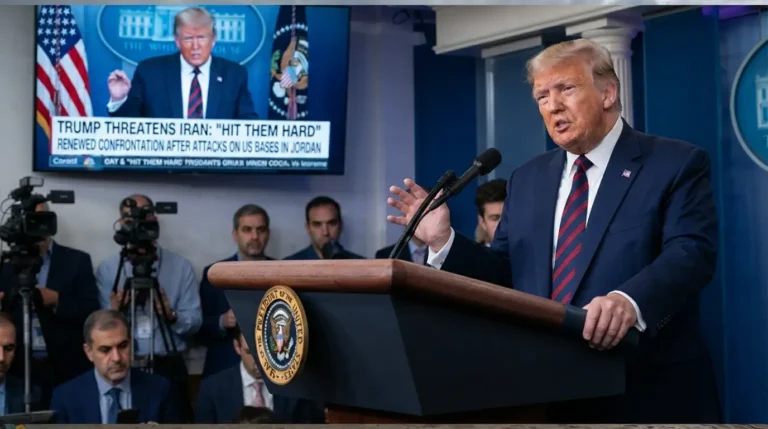
Iran’s currency crisis has intensified amid sanctions, disruption to trade and the wider economic consequences of the ongoing conflict. The Associated Press reported that the United States announced another round of sanctions on August 24, while warning countries conducting business with Iran of possible retaliation.
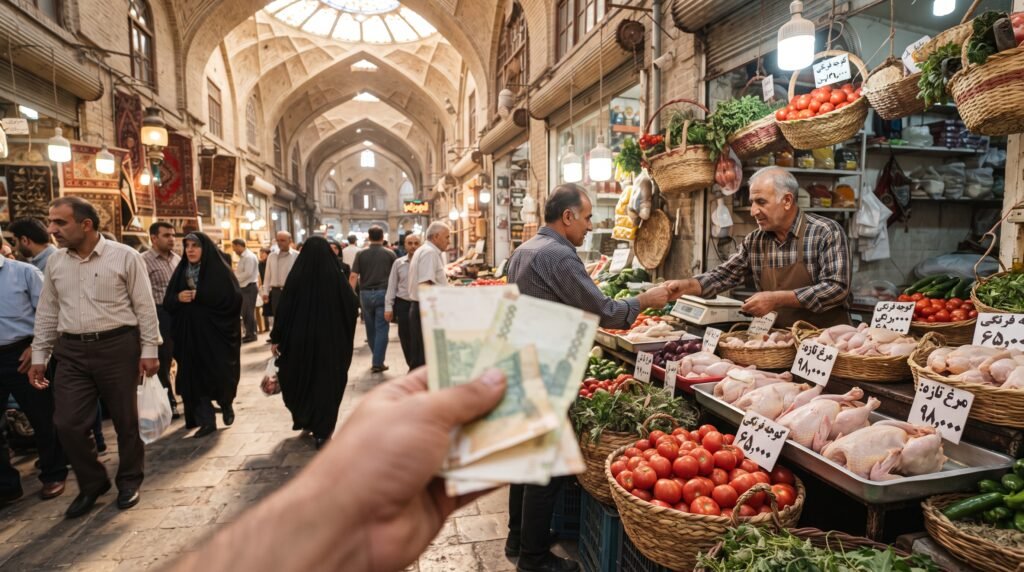
The economic pressure is also being reflected in everyday life. The Wall Street Journal reported growing concerns among Iranians about shortages and rising prices for essential goods, including food and cooking oil, while describing the rial’s decline as a major factor behind worsening purchasing power.
Despite the deterioration, Iran’s government has continued to resist pressure from Washington. Recent reporting has also highlighted the difficulty of translating sanctions and economic restrictions into political concessions, with Iranian authorities maintaining a defiant position despite the worsening economic environment.
The record-low rial is therefore more than a currency-market statistic. For ordinary Iranian households, its decline is increasingly visible through the rising cost of basic necessities and the shrinking amount of food that can be purchased with the same nominal amount of money.