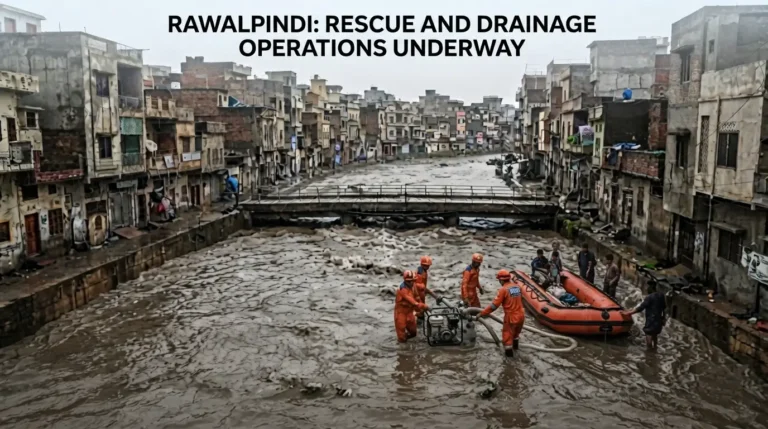
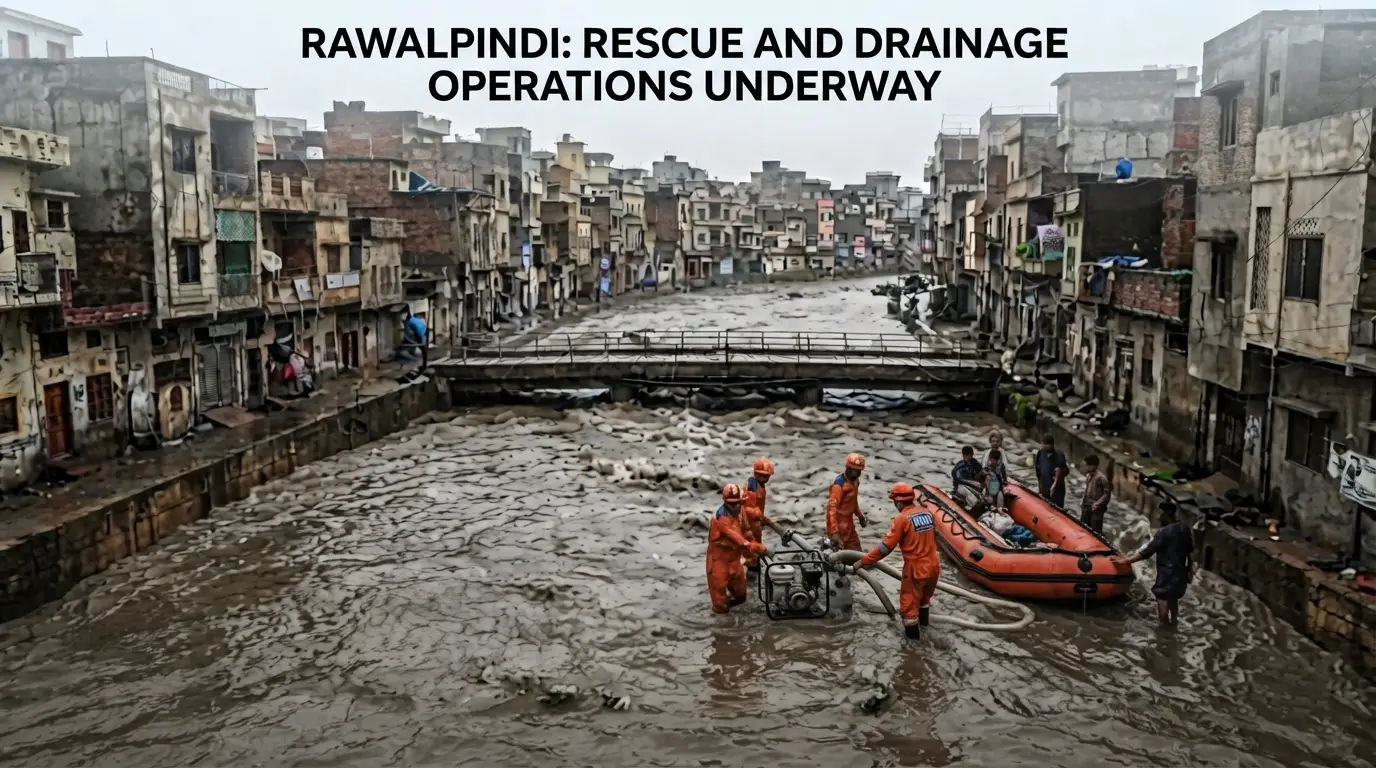
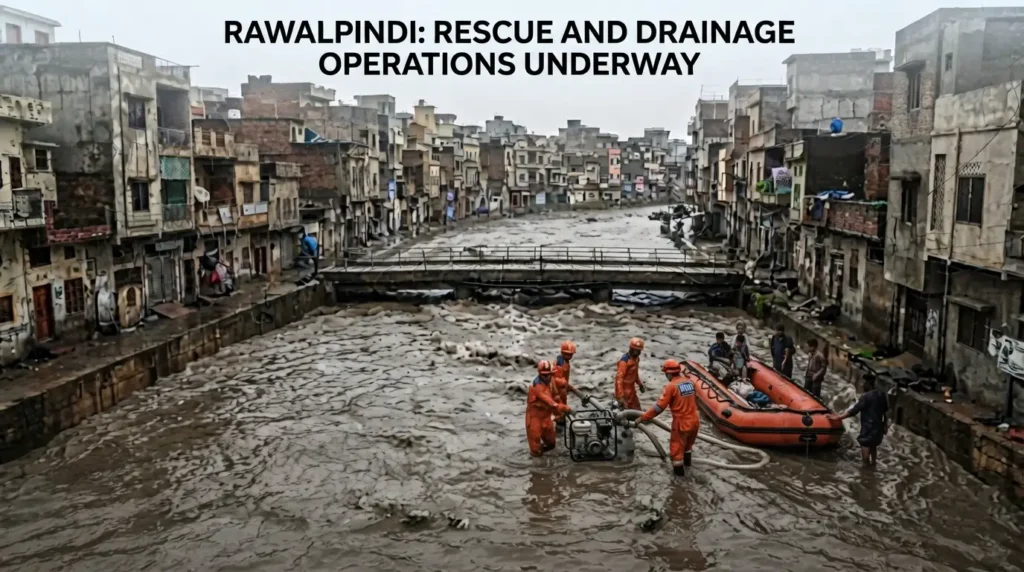
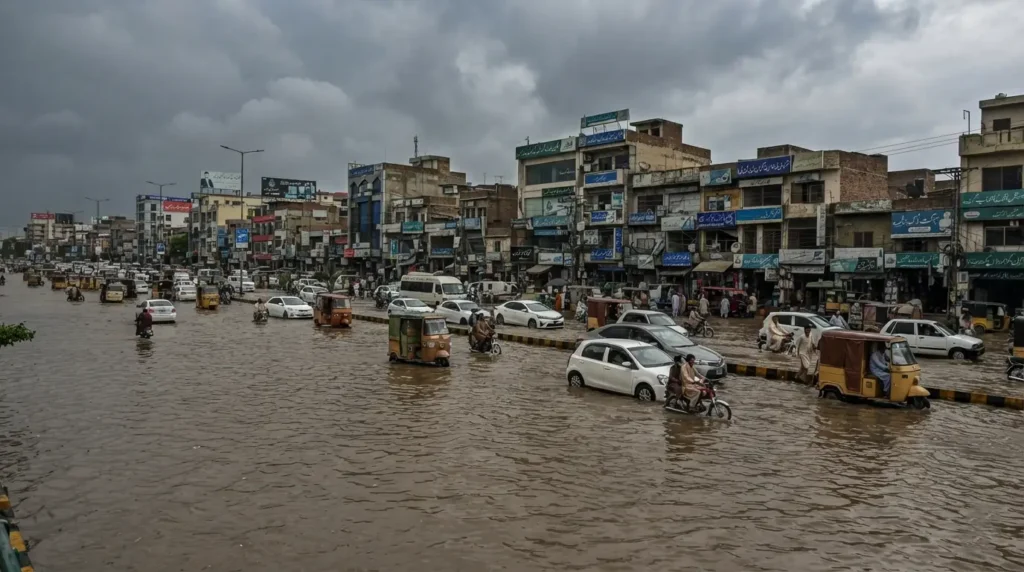
RAWALPINDI: Torrential rain triggered urban flooding in Rawalpindi and Islamabad on Tuesday, with Rawalpindi recording around 200 millimetres of rainfall and the water level in Nullah Lai rising to dangerous levels.
Rawalpindi Deputy Commissioner Captain (retd) Nadeem Nasir said the city had received its highest rainfall in three years. He said the heaviest impact was being felt around Nullah Lai, where drains feeding into the waterway were backing up and forcing water into surrounding areas.
According to rainfall data cited by the Pakistan Meteorological Department, Shamsabad recorded about 197mm of rain, while New Katarian received 185mm and Golra 157mm. Other locations also reported significant rainfall during the spell.
The rising water level in Nullah Lai has affected several low-lying areas of Rawalpindi. Authorities reported water accumulation in areas including Safdarabad, Sadiqabad, Dhoke Khaba, Pirwadhai, Fauji Colony, Javed Colony and Arya Mohalla.
Water levels at Katarian and Gawalmandi also rose sharply. Geo News reported a level of 29 feet at Katarian and 24 feet at the Gawalmandi bridge, while other reports recorded slightly different measurements, reflecting changing water levels during the developing situation.
The district administration has ordered residents living around Nullah Lai and other vulnerable low-lying areas to move towards safer locations. Evacuation teams have also been sent to affected areas as authorities monitor the situation.
Rescue 1122, the Pakistan Army, Rangers and other relevant departments have been deployed or placed on alert to assist the district administration. WASA teams and heavy machinery are also working in low-lying areas to drain accumulated rainwater.
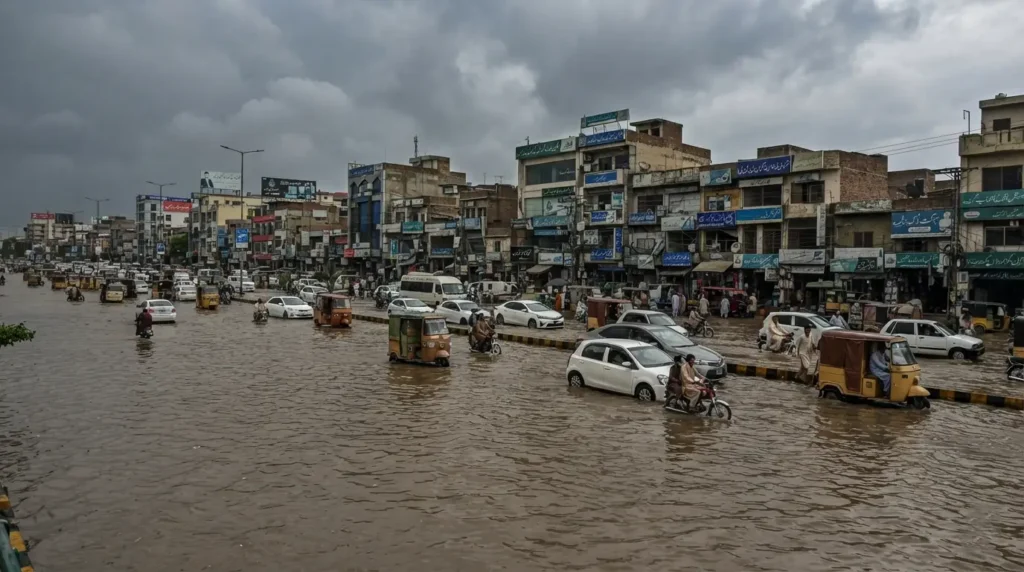
The heavy rainfall also disrupted normal movement across the twin cities, with water accumulating on roads and streets. Authorities have advised residents to avoid unnecessary travel while emergency teams continue drainage and monitoring operations.
The Rawalpindi district administration announced a holiday for public and private educational institutions in Rawalpindi city on Tuesday as a precautionary measure. Officials said the decision was taken because water had accumulated on roads, creating difficulties and potential risks for students travelling to and from educational institutions.
Nasir said the administration was expecting conditions to begin improving once the water level in Nullah Lai fell. He added that authorities remained prepared to respond to any emergency and were continuing drainage operations in affected areas.
The situation remains closely monitored as authorities assess the impact of the rainfall and the movement of water through Nullah Lai and connected drainage channels.